
Carbon Offsets vs Carbon Insetting: Why Indian Corporates are Choosing Local Ecosystem Restoration
Carbon insetting via local ecosystem restoration outperforms traditional carbon offsetting for Indian corporate ESG by embedding carbon reduction directly within an enterprise's own operational geography, providing verifiable data traceability and tangible socio-economic co-benefits. Unlike distant and often opaque international carbon credits, local environmental insetting creates visible climate resilience and satisfies domestic CSR mandates.
The Strategic Pivot in Carbon Management
Global voluntary carbon offset markets are facing intense scrutiny from international climate auditors, regulatory bodies, and sustainability media. This shift has prompted a fundamental reallocation of corporate sustainability capital. Forward-thinking Indian enterprises are rapidly moving away from traditional carbon offsetting purchasing distant, abstract carbon credits in favor of carbon insetting.
Carbon insetting involves investing directly into sustainable practices and ecological restoration within an organization's own operational regions, supply chains, and surrounding communities. For businesses operating in India, this approach provides a highly reliable, transparent, and socio-economically impactful path toward achieving true net-zero targets.
The Structural Differences: Offsetting vs Insetting
The strategic benefits of insetting become clear when contrasting its core operational mechanics against conventional offsetting models:
Geographic Proximity: Carbon offsetting typically funds distant, unverifiable international projects. Insetting focuses entirely on localized ecosystem restoration within immediate regional geographies or supply chain boundaries.
Data Traceability: Offsetting relies on complex, multi-tiered broker networks and generic registry certificates. Insetting utilizes direct, visible monitoring logs, geo-tagged sapling tracking, and verifiable local biomass audits.
Socio-Economic Co-benefits: Offsetting provides minimal or completely untraceable benefits to local communities. Insetting creates direct, permanent rural livelihoods, improves regional groundwater tables, and enhances local agricultural resilience.
Retaining Sustainability Capital Within India
Investing in local ecosystem restoration keeps sustainability capital working within the domestic economy. Instead of purchasing opaque credits from international trading desks, insetting directly funds the restoration of degraded Indian landscapes. This strategy actively mitigates local climate risks, such as urban heat islands in major industrial hubs and depleting water tables in rural manufacturing zones.
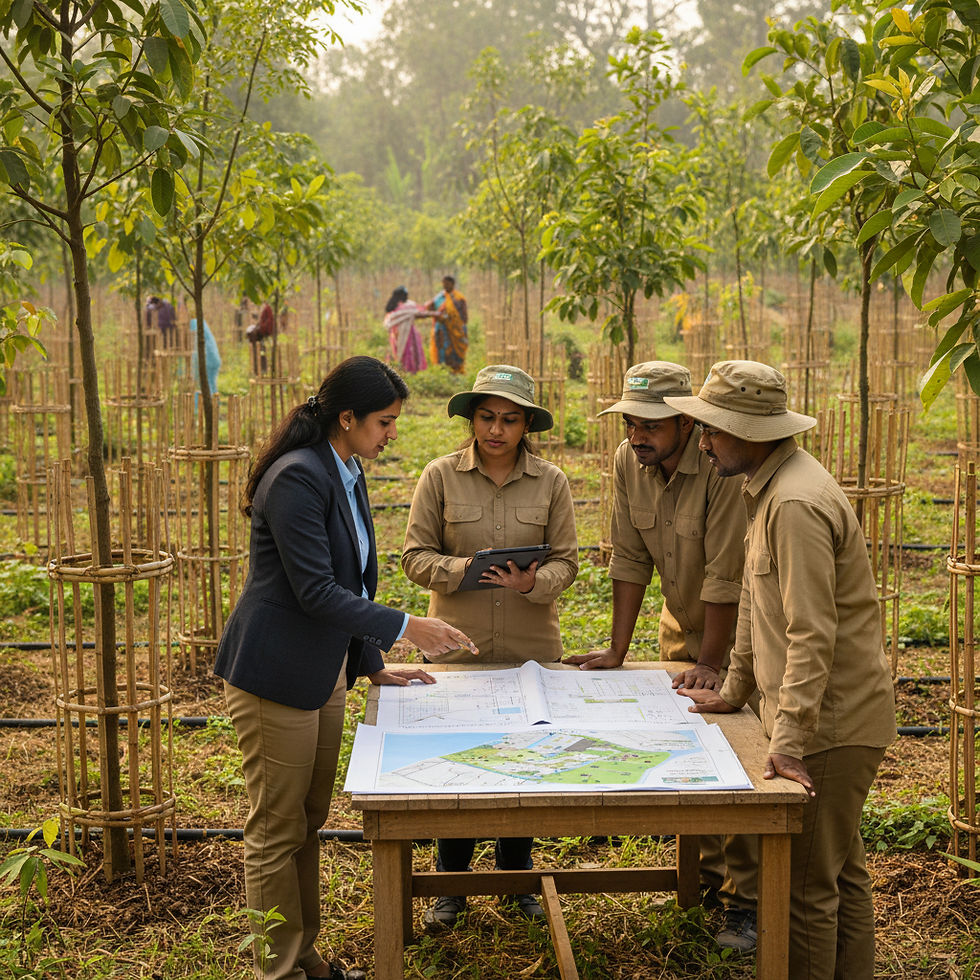
By focusing on native agroforestry and watershed management, companies can directly see the environmental return on their investment. Localized restoration ensures that the carbon captured, the water recharged, and the jobs created directly benefit the ecosystems and communities where the business operates.
To see this strategy in action, review our localized corporate initiatives by browsing our portfolio of Completed Projects across major industrial and rural hubs.


Comments